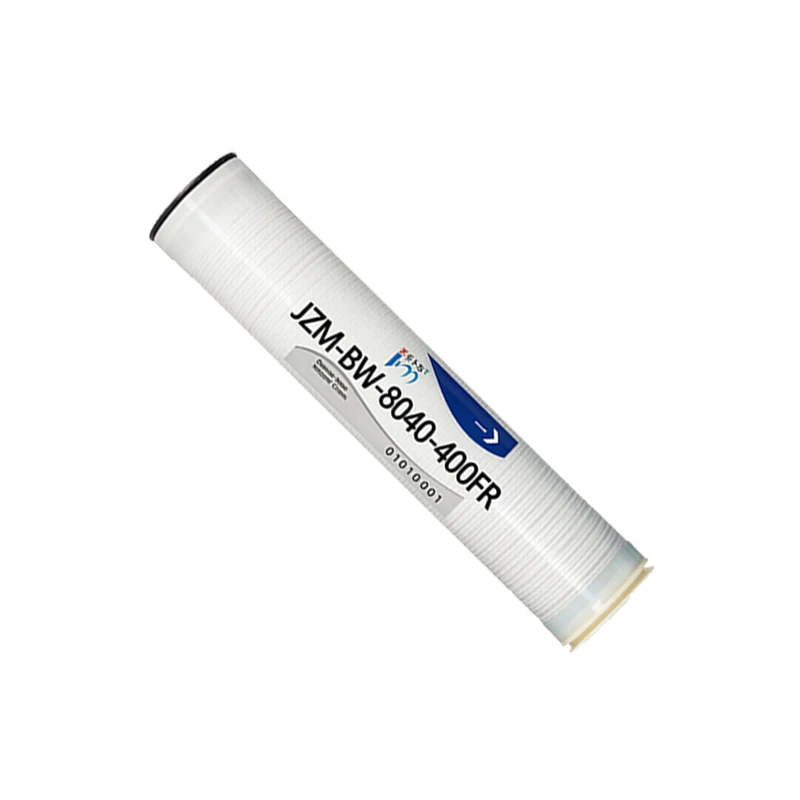
In the realm of water treatment, reverse osmosis (RO) membranes stand as a cornerstone technology, revolutionizing the way we purify water. As a leading supplier of reverse osmosis membranes, I am constantly intrigued by the relentless advancements in this field. One of the most remarkable developments in recent years is the integration of nanomaterials into RO membranes, a innovation that has the potential to reshape the future of water purification. Reverse Osmosis Membranes
Understanding Reverse Osmosis Membranes
Before delving into the role of nanomaterials, it’s essential to understand the fundamentals of reverse osmosis membranes. Reverse osmosis is a process that uses a semi – permeable membrane to separate dissolved solids, such as salts and other contaminants, from water. When pressure is applied to a solution on one side of the membrane, water molecules are forced through the membrane’s tiny pores, leaving behind the larger contaminants.
The performance of RO membranes is typically evaluated based on two key parameters: water flux and salt rejection. Water flux refers to the rate at which water passes through the membrane, while salt rejection measures the membrane’s ability to prevent dissolved salts from passing through. Balancing these two factors is crucial for efficient water purification.
The Emergence of Nanomaterials
Nanomaterials, defined as materials with at least one dimension in the nanoscale (1 – 100 nanometers), have unique physical, chemical, and mechanical properties compared to their bulk counterparts. These properties make them highly attractive for a wide range of applications, including water treatment.
In the context of RO membranes, nanomaterials can be incorporated in different ways. One common approach is to add nanomaterials as additives during the membrane fabrication process. Another method is to coat the surface of the existing membrane with a thin layer of nanomaterials.
Nanomaterials in Improving Water Flux
One of the primary challenges in RO membrane technology is achieving high water flux without sacrificing salt rejection. Nanomaterials offer a promising solution to this problem.
Carbon nanotubes (CNTs) are one of the most widely studied nanomaterials in RO membranes. CNTs have extremely high aspect ratios and smooth inner surfaces, which allow water molecules to flow through them with minimal resistance. By incorporating CNTs into the membrane matrix, the membrane’s porosity can be increased, leading to higher water flux. Additionally, the hydrophobic nature of the outer surface of CNTs can help to prevent fouling, which is a major issue in RO membrane operation.
Graphene oxide (GO) is another nanomaterial that has shown great potential in enhancing water flux. GO sheets have a two – dimensional structure with a large surface area and oxygen – containing functional groups. These functional groups can form hydrogen bonds with water molecules, facilitating their transportation through the membrane. Moreover, the inter – layer spacing between GO sheets can be precisely controlled, allowing for the selective passage of water molecules while rejecting larger solutes.
Enhancing Salt Rejection with Nanomaterials
Salt rejection is another critical aspect of RO membrane performance. Nanomaterials can be engineered to improve the membrane’s selectivity for water over salts.
Metal – organic frameworks (MOFs) are a class of porous materials composed of metal ions or clusters connected by organic ligands. MOFs have highly ordered pore structures and large surface areas. By functionalizing the pores of MOFs, it is possible to create a selective environment that allows water molecules to pass through while blocking the passage of salts. The high porosity of MOFs also contributes to maintaining good water flux.
Quantum dots are semiconductor nanocrystals that have unique optical and electronic properties. In RO membranes, quantum dots can be used to modify the surface chemistry of the membrane. By tuning the surface charge and hydrophilicity of the membrane using quantum dots, the interaction between the membrane and solutes can be optimized, leading to improved salt rejection.
Anti – fouling Properties of Nanomaterials
Fouling is a major limitation in the long – term operation of RO membranes. It occurs when contaminants in the feed water, such as organic matter, microorganisms, and inorganic scale, accumulate on the membrane surface, reducing water flux and increasing energy consumption.
Nanomaterials can play a significant role in preventing fouling. Silver nanoparticles have well – known antibacterial properties. By incorporating silver nanoparticles into the RO membrane, the growth of bacteria on the membrane surface can be inhibited, reducing biofouling. Titanium dioxide (TiO₂) nanoparticles are photocatalytic materials. When exposed to ultraviolet light, TiO₂ can generate reactive oxygen species that can degrade organic contaminants on the membrane surface, preventing organic fouling.
Challenges and Considerations
While nanomaterials offer many benefits in RO membranes, their widespread adoption also faces several challenges.
One of the main concerns is the stability of nanomaterials within the membrane matrix. Over time, nanomaterials may leach out of the membrane, especially under harsh operating conditions. This not only reduces the performance of the membrane but also raises potential environmental and health risks.
Another challenge is the cost of nanomaterial synthesis and membrane fabrication. Many nanomaterials require complex synthesis procedures, which can be expensive. Additionally, the incorporation of nanomaterials into the membrane may require specialized manufacturing techniques, further increasing the production cost.
Our Role as a Reverse Osmosis Membrane Supplier
As a supplier of reverse osmosis membranes, we are at the forefront of integrating nanomaterials into our products. We invest heavily in research and development to explore the potential of different nanomaterials and optimize their incorporation into our membranes.
Our team of scientists and engineers works tirelessly to address the challenges associated with nanomaterial – based RO membranes. We focus on developing stable nanocomposite membranes that can withstand long – term operation without significant leaching of nanomaterials. We also strive to find cost – effective solutions for nanomaterial synthesis and membrane fabrication to make our products more accessible to a wider range of customers.
Conclusion and Call to Action

The use of nanomaterials in reverse osmosis membranes represents a significant step forward in water treatment technology. With their ability to improve water flux, salt rejection, and anti – fouling properties, nanomaterials have the potential to make RO membranes more efficient, durable, and cost – effective.
EDI Modules If you are in the market for high – performance reverse osmosis membranes, we invite you to reach out to us. Our team of experts is ready to assist you in finding the best membrane solution for your specific needs. Whether you are a small – scale water treatment plant or a large industrial facility, we have the products and expertise to meet your requirements. Contact us today to start a discussion about your water purification needs and how our nanomaterial – enhanced RO membranes can bring value to your operations.
References
- Elimelech, M., & Phillip, W. A. (2011). The future of seawater desalination: energy, technology, and the environment. Science, 333(6043), 712 – 717.
- Nunes, S. P., & Peinemann, K. V. (Eds.). (2001). Membrane technology in the chemical industry. Wiley – VCH.
- Zhu, Y., Cai, Z., & Lee, H. K. (2017). Nanocomposite membranes for water treatment. Chemical Reviews, 117(11), 7575 – 7621.
- Hoek, E. M., & Chan, C. K. (2004). A review of the effects of feedwater chemistry on the fouling of reverse osmosis and nanofiltration membranes. Desalination, 160(1 – 3), 175 – 193.
Shandong Jinzhimo Environmental Protection Technology Co., Ltd.
As one of the most professional reverse osmosis membranes manufacturers and suppliers in China, we also support customized service. Please feel free to wholesale advanced reverse osmosis membranes in stock here from our factory. For pricelist, contact us now.
Address: Room 101, Building 9, Shangri-La, Jinlong Road, Zhaoyuan City, Yantai City, Shandong Province
E-mail: zhanglina0778@126.com
WebSite: https://www.sdjzmhb.com/
